One engine. Every surface it runs on.
The same deterministic harmony underneath all of it. Ask for a voicing twice and you get the same notes twice, whether you asked from an agent, a DAW, a pedal or a browser tab.
Interactive Musical Hub
Touch the harmony. Hear it compute.
Every tool below runs on the deterministic pitch-class engine. Test the Model Context Protocol live in your browser: parse chords, compute exact frequencies, audition voice-led chord stacks, explore substitutions, and conduct synthesized grooves.
THIRI MCP and the API
The engine as a tool your agent can call: analyse a chord, resolve it, ask for a voicing, reharmonise a progression, arrange a band. Deterministic by design, so the same request returns the same notes and you can explain the answer after the fact.
Over MCP for agents, over REST for everything else. A free key takes a minute.
Get a free key → Read the docs →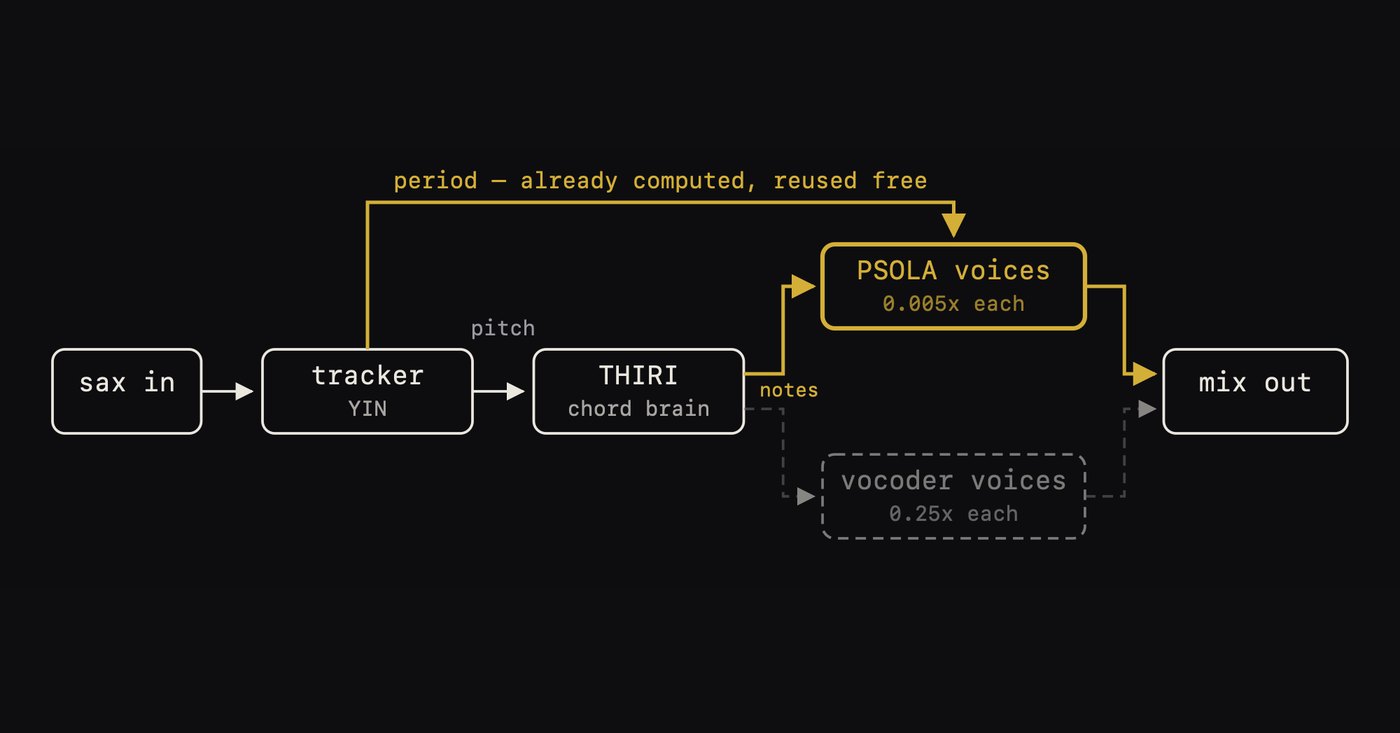
THIRI VST
A plugin and a standalone app. Play one line on a horn and hear a section in your own tone: THIRI never synthesises, so each harmony voice is your own sound moved onto its calculated note with the formants kept.
Part of HRN SXTN, which is in development and not for sale.
See the desktop line →No screenshot of the VST or the standalone exists yet, and a board photo here would read as the pedal.
THIRI on the Elk Stomp
The whole engine headless on a stock $399 pedal. No laptop, no network, no second box. Five voices at 0.82 ms average and 1.11 ms worst against a 1.333 ms deadline, zero dropouts across three sweeps.
First place in the Elk Audio challenge at MUTEK Montreal. A measurement instrument, and you cannot buy it.
See the pedal → Read the measurement →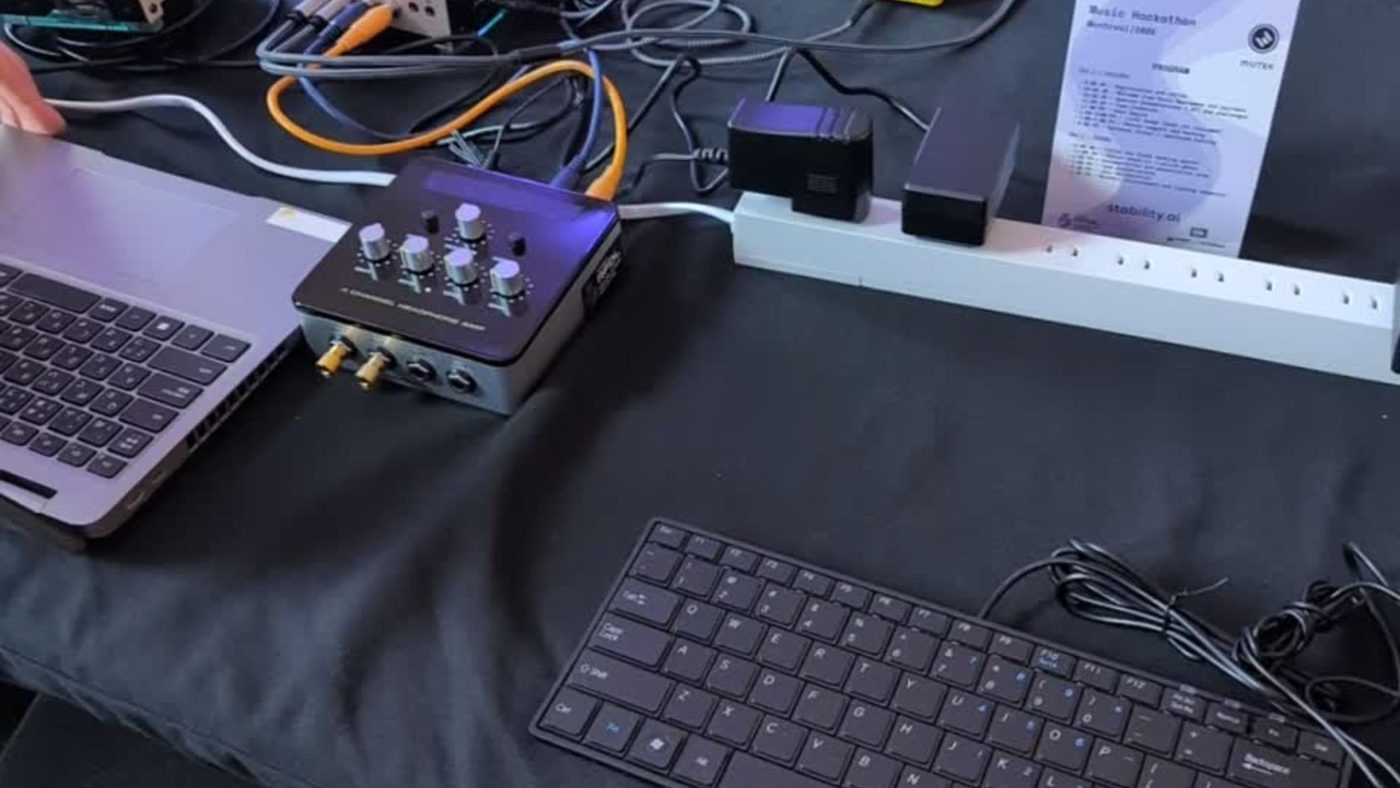
Run the Changes
A practice tool that holds you to the chart. It generates the changes, voices them correctly, and keeps the harmony honest while you play over it, so what you hear in the room is what the tune actually does.
Play Run the Changes →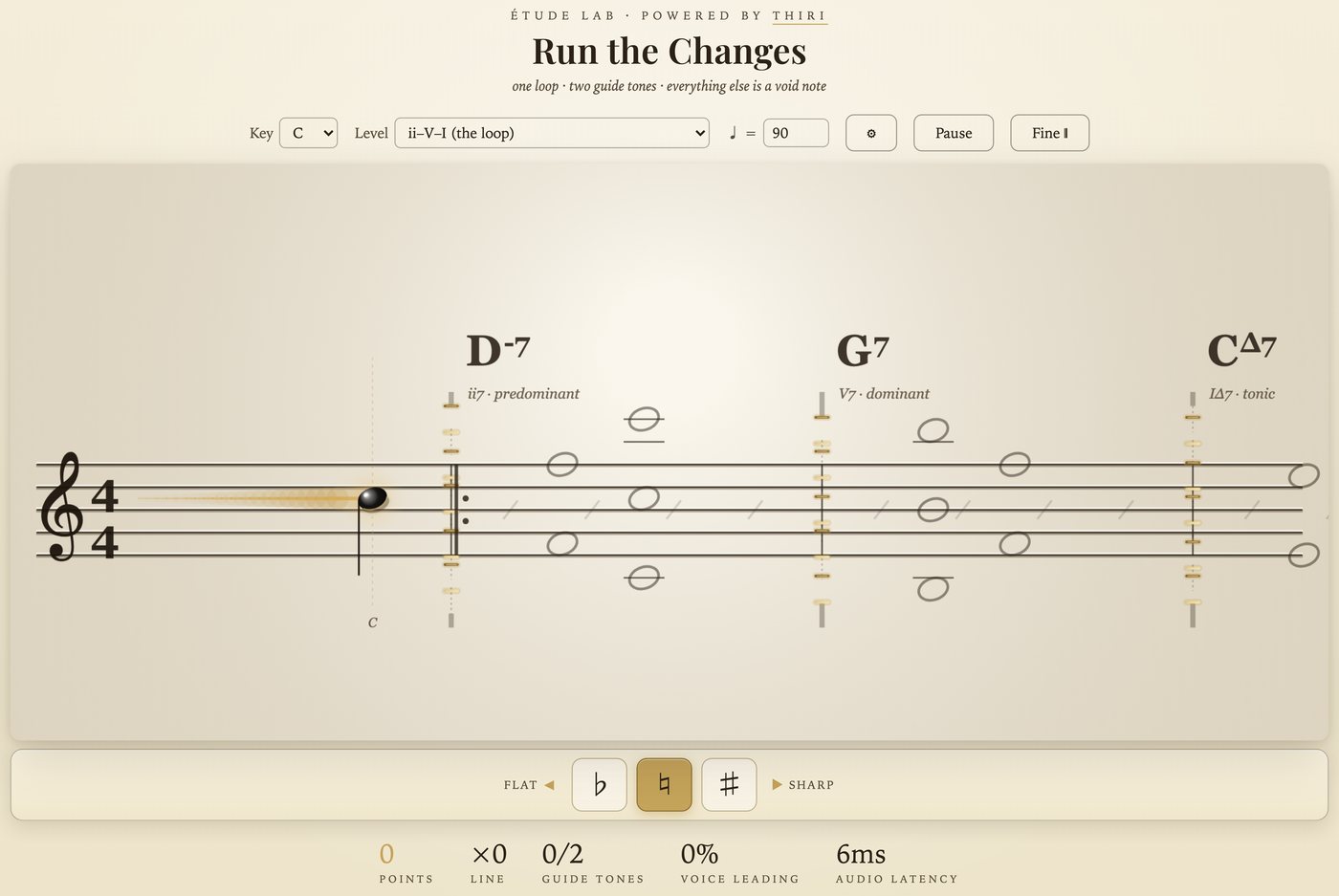
Composer C
Sketch a progression, reharmonise it, hear it voiced properly, and keep the result, because it will be the same result tomorrow. Form, harmony, layers and stems from one spec you can carry on editing.
Open Composer C →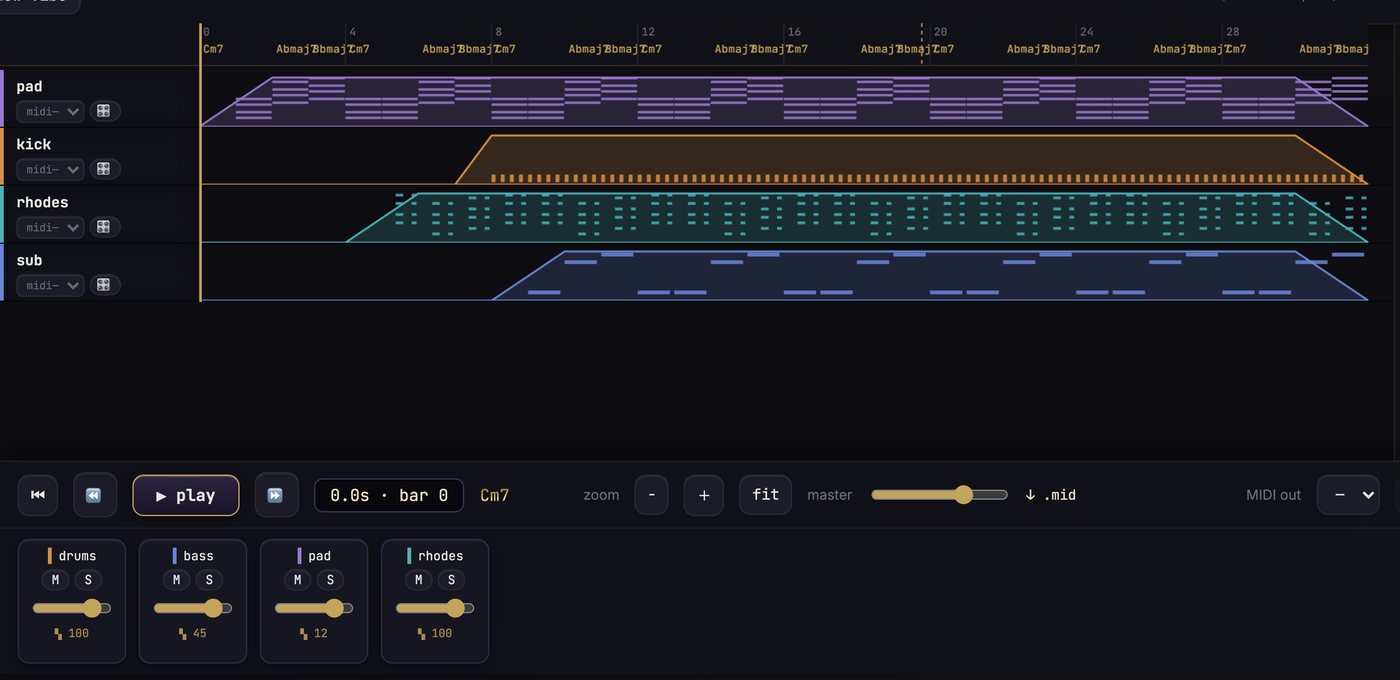
KORUS
Sing one line and hear it answered in five parts, in your own voice, with your formants intact. It voices against the chart, so the harmony moves when the chord does. A browser and a microphone, nothing to install.
Open KORUS →The live host still serves the old landing page until thiri-demo-web #3 merges.
Helix Arpeggiator
Voice-led paths across your changes. Every note is legal against the chord underneath, and every performance is reproducible from a seed and a tempo, so you can keep the take you liked.
Open Helix →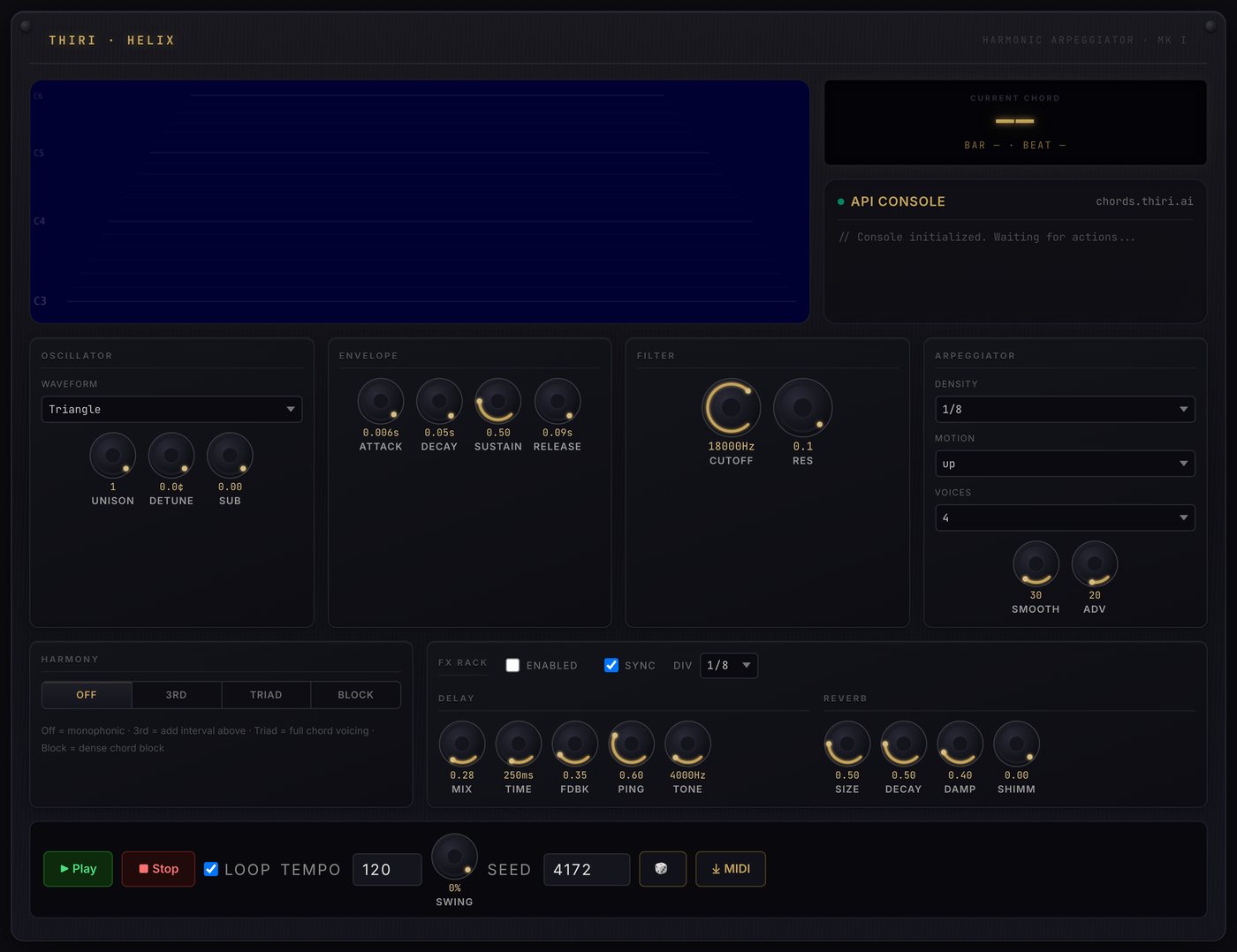
Conductor
Describe the feel in words. THIRI arranges a four-piece band with harmony, bass and drums, then plays it in the browser. The theory is decided before a note is rendered.
Open Conductor →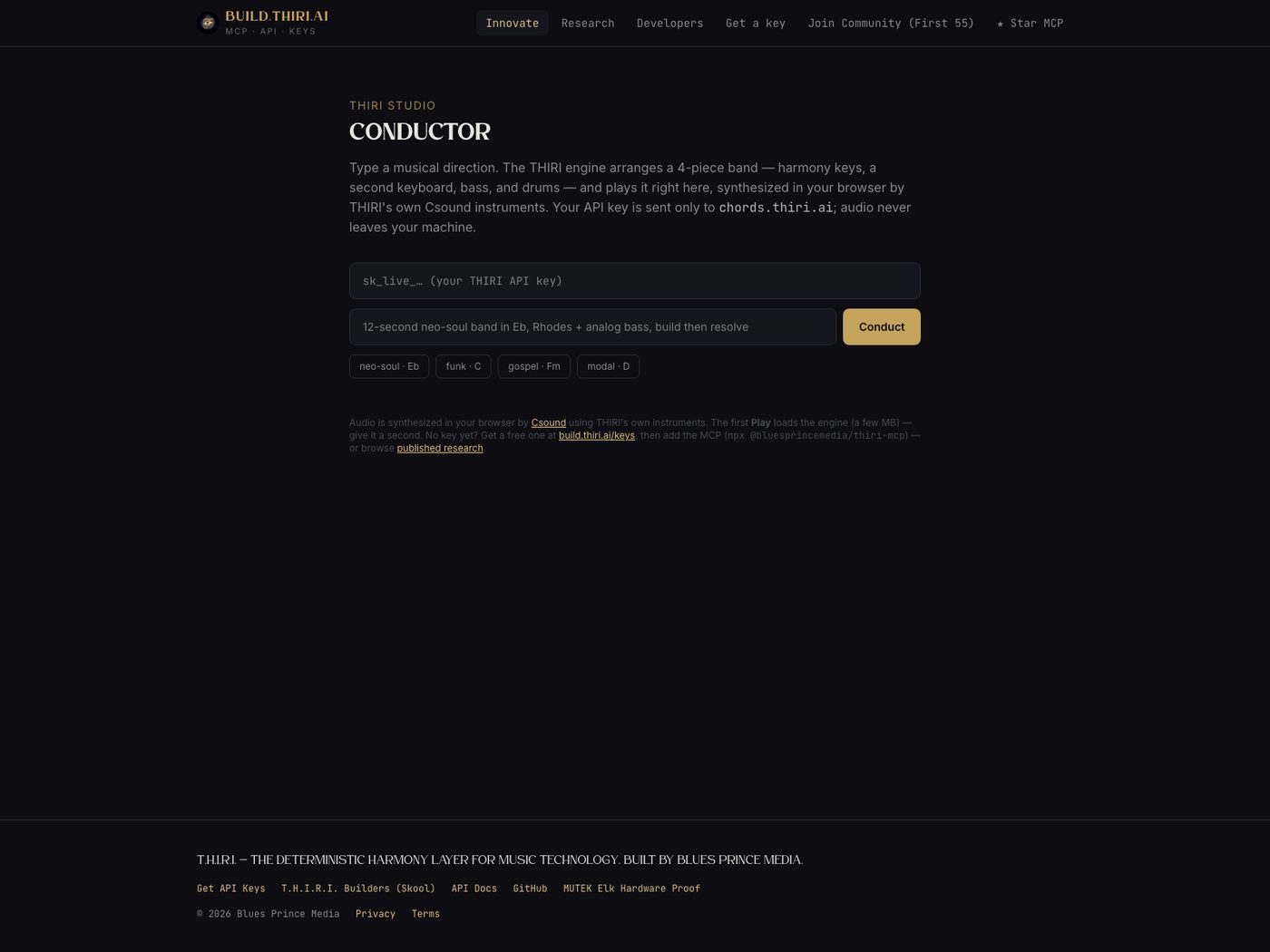
Studio Rack
Helix, Vocal, Keys, Drums and Band in one page, each wired to the live API. The closest thing to seeing the whole engine working at the same time.
Open Studio Rack →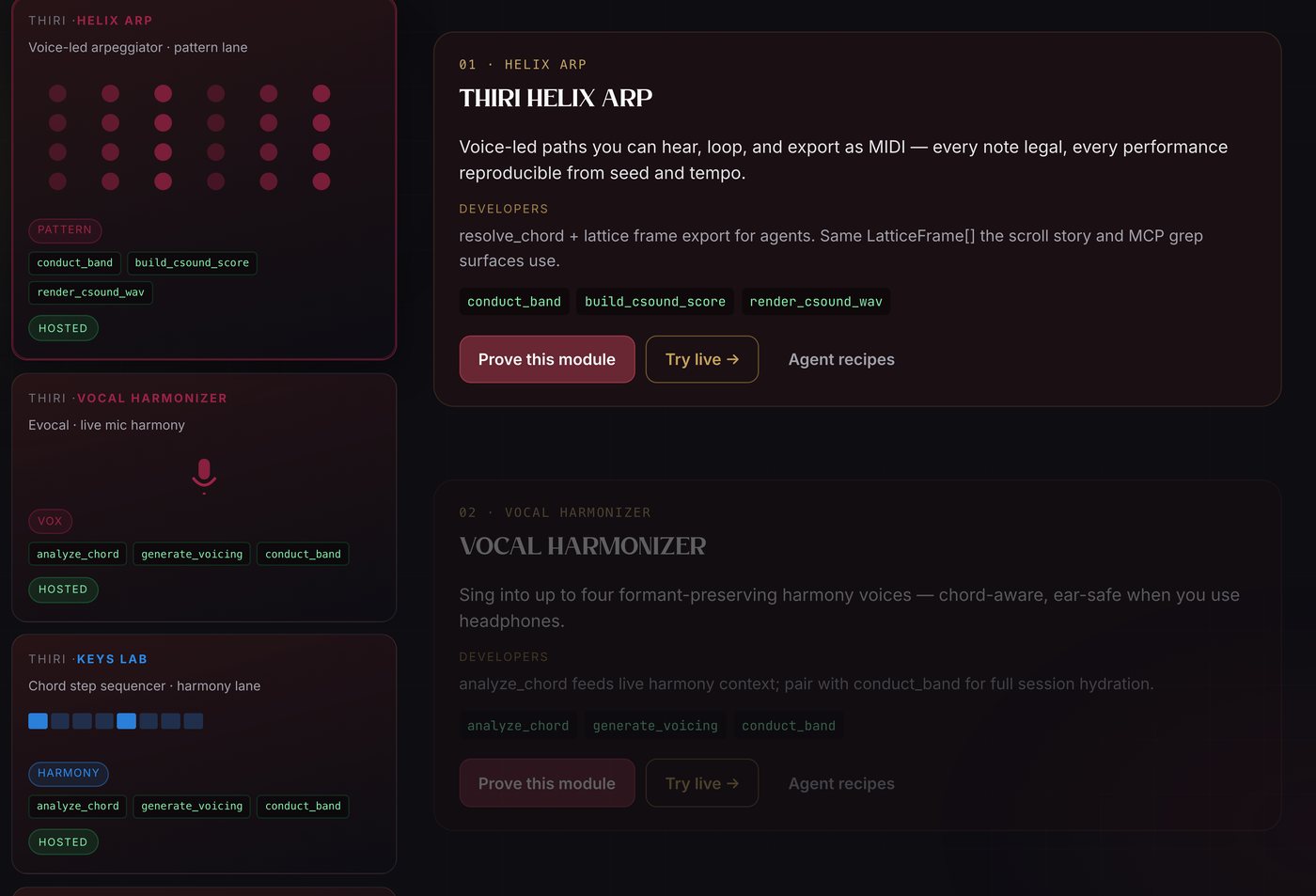
Sound Corpus 3D
155 sound samples mapped across Pitch (X), Timbre (Y), and Envelope (Z) in Euclidean space. Grounded by THIRI's deterministic theory engine so an AI agent can query sound with mathematical certainty.
Open Corpus 3D →Live 3D Web Audio Canvas